Confessional Repentance, the Conditions of Revival
Ministries > HopeLives365 with Mark Finley

SUBSCRIBE:
Apple Podcasts
True repentance is a godly sorrow because we’ve broken God’s heart. But that repentance sets our will in a new direction. In this, it gives us an indignation towards sin and enables us to desire to live differently.
Guest (Male): So true repentance is this godly sorrow because I broke God's heart that sets my will in a new direction that gives me an indignation or a hatred toward sin and enables me to desire to live differently. This is HopeLives365 with Pastor Mark Finley. Today's message: Confessional Repentance, the Conditions of Revival. Enjoy and remember you can always catch up with past messages and stay up to date with HopeLives365 and Pastor Mark by going to HopeLives365.com. And now, Pastor Mark Finley.
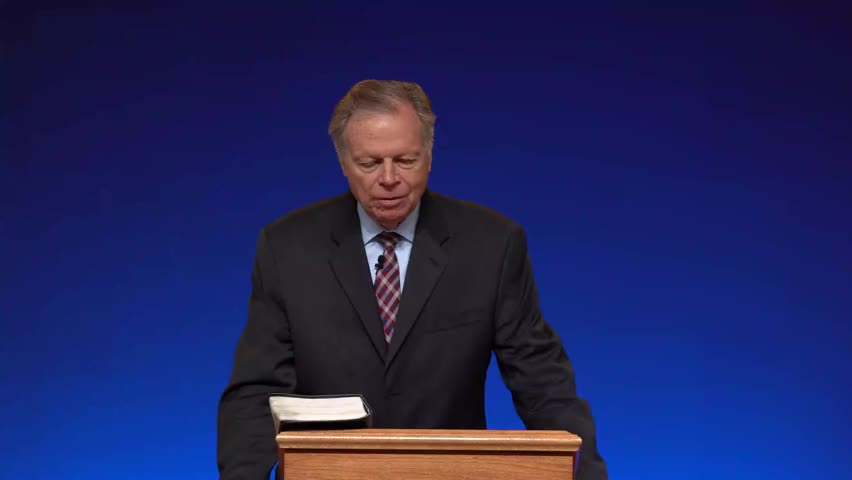
Mark Finley: Our Sabbath School lesson this quarter focuses especially on the topic of revival and reformation. It's possible to use terms and not define them. When we talk about revival, what specifically do we mean? When we talk about reformation, what do we mean? Revival is the reawakening of God's grace in the soul. Revival has to do with the reawakening of spiritual life. It has to do with knowing Jesus afresh and new every day. Like Lamentations so well describes it, His mercies are new every morning. So what is revival? Why do we need revival? It's like an old hymn says, "Prone to wander, Lord, I feel it. Prone to leave the God I love. Here's my heart, oh take and seal it. Seal it with the things above." So why does the church need revival? When you and I come to Jesus, our hearts are transformed by His grace, charmed by His love, and changed. But because we still have natures that are fallen, we tend to wander. So God invites us every day to come to the cross, to know Jesus afresh and new. So revival is a daily experience in the life of the believer. It is daily experiencing God's grace. There will never be a time that believers do not need revival. It's a daily experience. What about reformation? When we talk about reformation, what are we speaking about? Are we speaking about reform and the reformation in the days of Martin Luther? When we talk about reformation, what are we talking about? Are we talking about a change of diet, a change of dress, a change of educational system, or a change of medical system? When you use the term reformation, it can be quite ambiguous and it may mean different things to different people. In fact, there's actually a group called Reform Adventists. So when we talk about reformation, what do we mean in a biblical sense? Reformation in a biblical sense always follows revival. Revival is this renewal of spiritual grace in the soul. But reformation has to do with the change of habits and attitudes and thoughts that leads me to a new lifestyle. So revival always leads to the reawakening of God's grace. Reformation has to do with this reorganization of life, this reorganization of habits, this practical change of lifestyle where God points out things in my life through His Holy Spirit that need change. Now in our series in the Sabbath School lesson, we are focusing on lesson number six, which is confession and repentance. Why put a lesson on confession and repentance in a series on revival and reformation? Because as you look at revival down through the centuries, as you look at revival in the history of Israel with Josiah, look at David's prayers in Psalms, or you look at the revival in the days of the minor prophets, they all focused on repentance and confession. They all focused on coming to the point of a deep sorrow for sin. When you look at the book of Acts, repentance is all through the book of Acts. You look at Acts 2, Acts 3, Acts 16 and 17, Acts 20, and onward. There is a great emphasis on repentance and confession. Now one of the things I want to do in the time we have together today is focus on this aspect: that if repentance leaves you in a place of sorrow focusing on your own sins, that's not true repentance at all. The object of repentance is not to leave an individual more discouraged than before they repented. The object of all repentance is to focus on the goodness of Jesus, the marvels of His grace, and the beauty of His love so that I want to be more like Him. Any approach to repentance that says, "Oh Lord, I'm so wretched. Oh Lord, I'm so wicked. Oh Lord, I'm so evil," that leaves me wallowing in my sin, is not beneficial. That repentance that leads me to see how great Jesus is and long to be like Him is a repentance that motivates lifestyle change. Now we look at repentance in Sunday's lesson, Repentance: God's Gift. And if you have your Bible, I invite you to take it and turn to Acts the fifth chapter. In my study of repentance, there was something that was quite obvious that I often overlooked. Here's a basic question: is repentance something that we work up or something that God places within? Is repentance our desire to work up an emotional sorrow for sin, or is repentance a gift that God gives us? Acts the fifth chapter, you're looking there at verses 30 to 32. I want you to notice them carefully. Acts chapter five, verse 30 to 32: "The God of our fathers raised up Jesus whom you murdered by hanging on a tree. Him has God exalted to His right hand to be Prince and Savior." Three things about the passage so far. First, the passage talks about the crucifixion of Christ. Christ hung on a tree, verse 30. Second, the passage talks about the resurrection of Christ. The God of our fathers who raised up Jesus. Thirdly, the text talks about the high priestly ministry of Christ. Him God has exalted to His right hand to be Prince and Savior. So you have the death of Christ, the ascension of Christ, the resurrection of Christ. Now notice because of Christ's death, because of Christ's resurrection, and because of Christ's high priestly ministry, to give repentance to Israel and forgiveness of sins. "And we are His witnesses to these things, so also is the Holy Spirit whom God has given to them that obey Him." Now that text is packed. Christ died, Christ resurrected, Christ is our high priest, and He gives repentance to His people. So where does genuine repentance come from? Where does it come from, everybody? From Jesus. Is repentance a gift? Yes. Just as salvation is a gift, repentance is a gift. So as I kneel before Jesus every day, looking at the cross of Calvary, seeing His goodness, as I meditate upon His life, as I walk with Him in the dusty streets of Galilee, as I travel with Him down the cobblestone streets of Jerusalem. As I see Jesus touch the eyes of the blind and they're opened, and touch the ears of the deaf and they're unstopped, as I see Jesus touch the withered man's arm, as I see Him break the bread and feed the 5,000, as I see Him say to the woman caught in adultery, "Go and sin no more," I am so charmed by His love. I see the difference between my worldliness and my sin and Him. I see Him and I say, "Oh Jesus, grant to me the gift of repentance." And He places within my heart a sorrow for the difference that I am between my faulty, weak, sinful life and His glorious righteous life. So it is looking at Jesus that we are transformed. It is by understanding His perfection that we understand our imperfection. It is seeing His strength that we recognize our weakness. So notice repentance is a gift. It is not something we work up, it is something He places within our heart. And it does not come by looking at our wretchedness. Our understanding of our wretchedness comes from looking at Him. When I look at myself, I never see any possibility to be saved. But when I look at Jesus, I see no possibility to be lost. And so repentance is a gift. If you will notice in the lesson, I have quoted a statement in *Acts of the Apostles*, page 36. You'll find it in Sunday's lesson and you'll find it in the middle of the page there. "As the disciples waited for the fulfillment of the promise," that's the promise of the Holy Spirit. Are we waiting for the fulfillment of the promise of the outpouring of the Spirit of God in latter rain power today? Are we waiting for that? Is God pouring out His Spirit on the church today? Certainly. Do we see the showers of the early rain? Definitely. But before the coming of Christ, will there be an additional outpouring of the Spirit's power in the latter rain to enable us to finish the work? Is that promise there? The disciples waited for that promise. When the disciples met in the upper room, there were about 120 disciples that met in the upper room. The population of the Roman Empire at the time, there are different population figures that you have by various demographers, but it was probably about 550 to 600 million people. So about 600 million lived in the Roman Empire. You have 120 Christians that meet in the upper room, which is a ratio of one to probably at least about a half a million, maybe 600,000. So one Christian to 600,000 people. Now there's one Adventist today to about every 400 people in the world today. But the amazing thing is in the upper room, it was one to about 550,000. Those disciples met, they sought God, and the outpouring of the Holy Spirit took place, and thousands were baptized in a few short years till there were at least a million Christians by the end of the first century.
Guest (Female): We'll be right back with Pastor Mark Finley. We thank you for listening and hope you're enjoying today's message. Our mission is to attractively present the Christ-centered biblical truths of Scripture in a practical, relevant way to people around the world so that they may experience the abundant life that Christ offers. If you want to learn more about the Bible, check out our free Bible series at GlobalBibleSchool.org. That's GlobalBibleSchool.org. Discover answers to your deepest questions straight from God's Word. And now back to Pastor Mark Finley.
Mark Finley: The task that is before us is no greater than the task that was before them. In fact, it was more difficult often in the days of the Roman Empire than it is today in many ways if you look at that from a sociological standpoint. But here's the amazing thing: they met, they repented of their sin, they saw the beauty of Jesus's holiness, they entered into true sorrow, and God poured out His Spirit. When the church is on its knees looking at Jesus, seeing ourselves as we are, Christ manifests Himself to us. Our lives are transformed by His grace. He empowers us by His Spirit. Now the word repentance in the Greek language is a very fascinating word. It is the word *metanoeo*. Now for a long time, I translated that word from Greek to English in a very simple way, and I would say the word *metanoeo* means simply a change of attitude toward. It does mean that. But if you look at the richness of the word *metanoeo* in the Greek language, repentance, it means much more than a change of attitude. It means a change of attitude that motivates the will. And this is a literal translation of *metanoeo* from the best Greek lexicons: it is a change of attitude which transforms the will and sets it in a direction of obedience. You can have no true repentance without a mindset for obedience. All true repentance leads far beyond a sorrow that is an emotional sorrow. Repentance is not evaluated in the Bible by my tears or my emotional grief. It is evaluated in the Bible by the desire for a lifestyle change. Now that leads us to Monday's lesson, True Repentance Defined. The story is told of a little boy, and this little boy had this habit of leaving his room messy. He was about nine years old, and as much as his mom wanted to have his room clean, he just had his real time. Any of you have a child like that? "Clean your room please, clean your room please," and he kept his room messy. Well, on this particular day, he got out all of his Legos and all of his toys and his room was a colossal mess. So that night at family worship, his mother felt that she needed to address that. So she talked about repentance and how it was sorrow for what you've done wrong, and she said, "Son, now what you really need to repent of is mama has told you clean your room, clean your room, clean your room. Don't leave all your Legos all around. You need to repent." So he knelt down and prayed a prayer like this: "Dear Jesus, I am so sorry that I left my room so messy today, but it sure was fun." Is that repentance? Take your Bible please, 2 Corinthians chapter seven. "I'm so sorry I left my room messy today, but it sure was fun." 2 Corinthians chapter seven, and we're looking there at verse nine to 11. 2 Corinthians chapter seven, verse nine through 11 is one of the best descriptions in the Bible about genuine repentance and what it's about. 2 Corinthians chapter seven, verse nine: "Now I rejoice, not that you were made sorry." Now Paul is writing to the Corinthians, he's written the first letter to the Corinthians, and somebody said that the church at Corinth was Paul's excerpted headache. The church at Corinth, members were suing one another, and they were abusing the Lord's Supper. One of the big problems at Corinth was that there was immorality in the church. It was so bad that there was incest in the Corinthian church. You can read about that in 1 Corinthians 5 and onward. And the Corinthians weren't dealing with sin in the church at all. They were treating it very, very lightly. And so the apostle Paul wrote to them, 1 Corinthians. And as he did, it broke their hearts, and they entered into genuine sorrow about the toleration of sin that they had in the church. And Paul writes to them in 2 Corinthians chapter seven, verse nine: "Now I rejoice, not that you were made sorry," that is, sorry by my letter, "but that your sorrow led to repentance." So if sorrow leads to repentance, can you have sorrow without repentance? Yes, you can. You can be sorry because what you did is going to cause circumstances in your own life. You can be sorry that you said something to a husband or wife and they got mad. You can be sorry that you were dishonest and you got caught. You can be sorry for the consequences of the action, but not that your action broke the heart of God. See, true repentance is not that I'm sorry because of the consequences of what happened to me because I sinned. True repentance is I'm so sorry because I dishonored God. I'm so sorry that I hurt another person. I'm so sorry that my words cut deeply into your heart. I'm so sorry that I criticized you and I'm so sorry that I talked behind your back and it severed our relationship. And I'm so sorry that in all of that, I dishonored God. You see, true repentance is when I'm on my knees saying, "Jesus, You love me so much. Jesus, Your grace is so amazing. Jesus, I hurt You with what I did." So until my sin gives me the pain that it brings to the heart of God, I will never turn loose of it. And so this is what Paul is praying about here. This is what he's talking about in 2 Corinthians chapter seven, verse nine: "Now I rejoice that you were made sorry, but that your sorrow led to repentance. For you were made sorry in a godly manner, that you might suffer loss from us in nothing." "For godly sorrow produces repentance to salvation, not to be regretted, but the sorrow of the world produces death." So there's two kinds of sorrow: godly sorrow that produces repentance. What is repentance? It's a change of attitude toward my sin. The thing I once loved, I now hate. The thing I once did casually, now I turn away from in abhorrence. The thing that I once enjoyed doing, now I loathe to do. But it's more than that. It is the setting of the direction of the will to choose to let the thing which I cherished that broke the heart of God go, because I no longer want to break His heart. So it looks at Jesus. Now notice the text, verse nine: "Now I rejoice that you were made sorry, but that your sorrow led to repentance." Verse 10: "Godly sorrow produces repentance." Now notice this verse 11, it's very interesting: "For observe this very thing, that you sorrowed in a godly manner: what diligence it produced in you." Now when you sorrow in a godly manner, it produces something. What's the first thing that it produces? What does it produce? Diligence. In other words, when I sorrow in a godly manner and see that my sin has broken the heart of God and I see the grace of Jesus, I become more diligent not to do that thing again. So, "what clearing of yourselves." When you sorrow in a godly manner, if you have hurt another person, you want to clear up that situation between you and the other person. If you've injured somebody else, if you've been dishonest, godly sorrow and repentance when I recognize I broke God's heart leads me to others to reconcile if I broke their heart. It says, "what indignation." What does this mean, "what indignation?" How does godly sorrow lead to indignation? Indignation is a form of strong anger. What does that mean? It means that I'm upset about the thing that I've done. I have indignation toward what I've done and I want to make it right. "What fear, what vehement desire, what zeal, what vindication! In all things you proved yourselves to be clear in this matter." So true repentance is this godly sorrow because I broke God's heart that sets my will in a new direction that gives me an indignation or a hatred toward sin and enables me to desire to live differently. We talk about true and false confession in Tuesday's lesson, and there is a statement in the book *Steps to Christ*, page 38, that I'd like to take a look at. But before we do that, let's look at Leviticus 5, verse 5. Let's go to Leviticus 5. This takes us back to the ancient sanctuary. Leviticus 5 and verse 5. In the ancient sanctuary, when somebody sinned, they of course brought an offering, sometimes a lamb, and there were other offerings, and the poor brought a pigeon offering or grain offering. In Leviticus 5, verse 5, there is a clear Bible text about what happened when the person brought their offering. It has to do with repentance and it has to do with confession. Leviticus 5, verse 5, it says: "And it shall be, when he is guilty in any of these things, that he shall confess that he has sinned in that thing." What does this Bible passage tell you about the nature of true confession? That true confession is what? Very specific. Has anybody ever come to you and said, "You know, if I hurt you by what I said, please forgive me." If I hurt you. What do you know when they say that? That's not genuine repentance. Genuine repentance is, "I am so sorry that I said this specific thing about you. I have gone to the people that I said it to and I've asked them to forgive me, and because I have hurt your reputation, please forgive me." That's genuine repentance. True confession and repentance is always specific. Now notice, there may be wrongs that should be confessed to individuals who've suffered injury through them. And then it goes on to say, they may be of a public character and should be publicly confessed. How do you know when to confess sin publicly and how do you know whether the confession of that sin publicly would be detrimental to you and the church? Let me give you a clear rule of thumb and here's what it is: you repair the fence where it's broken. If I have a farm and I have fence on the north, south, east, and west, and the fence on the north is broken and the sheep and cattle are getting out, and I repair the fence on the south, that is nonsensical. So here's the point: if my sin is between me and God, that need not be in any way made public. I confess it to Him. But if I live a profligate life after becoming a Christian of open rebellion and defame the name of God, and the youth and others in the church know it, there may be a time at that point where I come and say, "You know, I have lived a life out of harmony with God's purpose. It's publicly known and I've come to Jesus and my life has been changed. I want to honor Him."
Guest (Male): You've been listening to HopeLives365 with Pastor Mark Finley. We hope you've enjoyed today's message and remind you that you can find more in our many ministry resources at HopeLives365.com. And you can support this ministry by going to HopeLives365.com/donate. And now, a final thought from Pastor Mark.
Mark Finley: See, God forgives me on the cross of Calvary. But when I come to that cross, the confession, the forgiveness that He has wrought out on Calvary becomes mine when I come to Jesus. He gives me the gift of repentance.
Related Episodes
A Fresh Breath of Hope
Monday, September 21
Revelation's Creation Connection
Saturday, September 19
Seal of God
Friday, September 18
Related Videos


About HopeLives365
HopeLives365 exists as an international Bible based Christ-centered ministry to give people hope for today, tomorrow and forever. We believe that discovering God’s ultimate plan for our lives brings life’s greatest joy. In a world of uncertainty, God’s Word, rightly understood, brings certainty and assurance. Our ministry will provide you with the resources to live a life of total health-physically, mentally, emotionally and spiritually. If you are interested in improving your physical, mental, emotional and spiritual health there are resources on our HopeLives365 site that will make a positive difference in your life. If you have questions about faith check out our short video clips titled “Truth Still Lives.” If you would like to listen to powerful Biblical Sermons, Pastor Finley’s messages will touch your heart and change your life. If you want material on healthful living, Ernestine Finley’s Natural Lifestyle Cookbook and health related materials will get you on your way to a longer, happier and more fulfilled life. If you have concerns about the future and would like to face tomorrow with greater confidence our presentations on Bible prophecy or one of our Bible Courses are just what you need. The resources on this site are designed with you in mind to enrich your life. It is our desire that they make a powerful difference for you and your family.About Mark Finley
Mark Finley is an international evangelist, television and radio personality, author, teacher, and speaker for the Hope Lives 365 broadcast. He regularly conducts international satellite evangelistic campaigns with tens of thousands in attendance and has spoken in nearly 100 countries. His sermons have been translated into over 50 languages. He has written more than 70 books on Christian living, Bible doctrines, and the prophecies of Daniel and Revelation.Pastor Finley is a faithful student of scripture and proclaimer of Bible truth. He profoundly believes that the Bible is the inspired word of God and provides answers for the deepest questions of life today. His sincerity and love for people shine through each presentation. He and his wife Ernestine have teamed up in Christian ministry for over fifty years. She is known worldwide for teaching Natural Lifestyle Cooking. Continue their Today the Finley’s continue their worldwide ministry at the Living Hope School of Evangelism in Haymarket, Va. and also conduct a Retreat Center for pastors from throughout North America.
Contact HopeLives365 with Mark Finley
Phone:
1-855-888-4673


